When it comes to kitchen remodeling, there are layers of design. Sometimes a kitchen remodels can consist of updating. Maybe replacing appliances and countertops, refinishing cabinets, and upgrading hardware. Other times, it makes more sense to completely rethink your design taking a long look at ways to improve flow and functionality.
A major kitchen remodeling often consists of taking the room down to the studs, moving utilities, and recreating a more efficient design and floor plan. When you're talking about your kitchen remodel with a design-build contractor or kitchen designer, they will generally recommend one of the four common kitchen layouts.

Each has benefits and drawbacks and which design you ultimately end up with relies on several factors including the space available, your personal style, needs, and budget.
Kitchen Layout Pros & Cons: 5 Basic Types Demonstration
When all of the appliances, cabinets, and countertops are positioned along the same wall, designers call this the “one-wall layout.” Oddly enough, this design works equally well for both very small kitchens and extremely large spaces.
The one wall kitchen has several key advantages that make it an adaptable design. First, it's a layout that allows for unimpeded traffic flow. Because there are no barriers within the working space, it provides maximum openness.
It's also one of the easiest kitchens to design, plan, and execute. Because all of the utility services (plumbing and electrical) are clustered on a single wall, it's a quick design to execute, and it's also one of the least expensive kitchen design layouts.
Kitchen Islands: Pros And Cons
While it offers plenty of benefits, there are a few drawbacks to consider. First, counter space is limited, so if you are constantly preparing huge meals, a one-wall design might not be your best choice. It also doesn't utilize the classic “kitchen triangle” and as a result may be less efficient than some other options. Finally, because of limited space, it may be difficult or impossible to include a seating area in your design.
When your space is narrow or limited, for example, in a condo, smaller house, or apartment, the galley kitchen is often your only option. In this design, two walls facing each other have all of the kitchen services. A galley kitchen might be open on both of the remaining sides, allowing the kitchen to also serve as a passageway between spaces. Or the two remaining sides may have a window or door leading to the exterior, or simply walled off.
This kitchen design is used in commercial restaurant kitchens all the time because it is highly functional and efficient. A galley layout incorporates the kitchen triangle and provides homeowners with a bit more space for counters, workspace, and cabinets.
What Is Kitchen Layout?
Crowding can be a problem between workspaces if the aisle is too narrow. If you like to cook with your partner, it might not the best option. When the two remaining walls are open and used as a passageway, foot traffic can be inconvenient. The end wall when present, is typically a useless space and the limited space makes it difficult to include seating.
This is the most popular choice among homeowners. It features two adjoining walls that hold all of the appliances, countertops, cabinets, and other services, with the other two adjoining walls left open. This is the “standard” that many kitchen cabinet manufacturers and designers use when pricing out kitchens. Typical L-shaped kitchens are based on a 10' X 10' room.
The L-shaped kitchen makes the best use of the kitchen triangle and offers more countertop space than the galley and one-wall layouts. This design also lends itself to adding a kitchen island as there are no cabinets constricting its placement. Alternately, an L-shaped design makes it easier to include a table or other seating area in lieu of an island.
Popular Kitchen Design Layouts And Their Unique Advantages And Disadvantages
There are not many disadvantages to this design, however, the endpoints of the kitchen triangle - from the range to refrigerator – may be quite far apart. Also, corners can be a problem. Corner base and wall cabinets can be difficult to get to.
Think of this design as a galley kitchen except that one of the end walls has countertops or kitchen services. The remaining wall is left open allowing access into the space.

This design offers a great workflow for its efficient use of the kitchen triangle. The closed-end wall gives you plenty of additional storage and workspace that you won't find in a galley kitchen.
Pros And Cons Of L Shaped Kitchen
If you've always wanted an island. Consider a different design layout, unless you have a large space. Incorporating a kitchen island requires aisles that are at least 48 inches wide, and that can be difficult with this layout. With appliances on three walls and the fourth open for access, adding seating can be challenging in a u-shaped kitchen.
Ultimately, your kitchen designer or design-build contractor can offer you more options when it comes to choosing the perfect kitchen layout to meet your needs. They will work with you to take into consideration not only your available space but your lifestyle, functional and aesthetic needs when creating your custom kitchen design.
If you're considering a kitchen remodeling project and you live in Central or West, Alabama area give the kitchen design experts at Toulmin Kitchen & Bath a call at (205) 366-0807. If you would prefer to meet in person or on a video chat, schedule an appointment to talk about your project. Let us help you design your dream kitchen.If you are thinking of designing a kitchen with an island or just want to experiment with the different kitchen layout plans, you are in the right place. While kitchen island layouts are still one of the most popular kitchen designs, they can be rather tricky to design.
The Pros And Cons Of Kitchen Islands
Here’s what you need to take into account when considering kitchen island layout ideas, and how to bring the ideas to life.
The island kitchen layout is a kitchen design that includes a detached, countertop space within the kitchen. The freestanding counter can serve many purposes, from acting as additional dining space, being utilized as a workspace, supplying additional storage space, or as an entertaining area to gather friends and family.

Kitchen islands are most certainly not out of style. In fact, kitchen islands remain a popular kitchen layout style and often serve as the focal point for a kitchen. It is a versatile feature of any kitchen that comes with many unique advantages.
The Pros And Cons Of L Shaped Kitchens
The advantages of an island kitchen layout center around the kitchen island providing significantly more space for seating, storage, and workspace while maintaining an aesthetically pleasing appearance.
The disadvantages of an island kitchen layout center around size constrictions and budget limitations. However, with proper planning and designing, these can be avoided.
There are several things to keep in mind when looking at kitchen island layout ideas. We are going to talk about key considerations when it comes to size and dimensions, functionality, and positioning of your island kitchen layout.
Seven Most Popular Kitchen Layouts: Which One Is Best For You?
The size of your kitchen island is going to be primarily determined by the proportions of your kitchen and the aesthetics of the kitchen. A larger kitchen space will warrant a larger kitchen island.
In addition to designing an island with the overall proportions of the kitchen in mind, the purpose of the island will determine its size. If you wish to have seating at the kitchen island, a rule of thumb is to grant approximately 20-24 inches (50-60cm) per person seated. A 6-foot (1.8m) island would seat three people comfortably.

Finally, practicality is another factor to keep in mind. Even with the largest kitchen proportions, you might not want a kitchen island so wide you have to climb on chairs to clean it.
Popular Kitchen Layouts And Their Pros And Cons
With this in mind, you should remember that it is necessary to leave sufficient space around a kitchen island. Without seating, it is recommended to have at least 3 feet (90cm) between the island and other countertops or walls. With seating, it is recommended to have at least 4 feet (120cm) free around the island.
A kitchen island positioned directly in the center of the kitchen is one of the most popular designs, however, this might not be the most practical. If you use the kitchen island primarily for food preparation, then the island should be positioned near outlets and necessary appliances. If you use the island primarily for cleanup, then the island should be positioned near the sink and garbage.
How will you use the island? Do you plan to prep on one side and cook on the other? Do you plan on having one working side and one social size? Do you want any appliances on the island?
Popular Kitchen Design Layouts And Their Unique Advantages And Disad
These are all very important questions to ask yourself while you are designing your ideal kitchen island layout. The answers to these questions will influence the final dimensions and positioning of your kitchen island.
Going over these key points and asking yourself some of these questions will help you get a clear picture of the direction you will go with your kitchen island ideas.
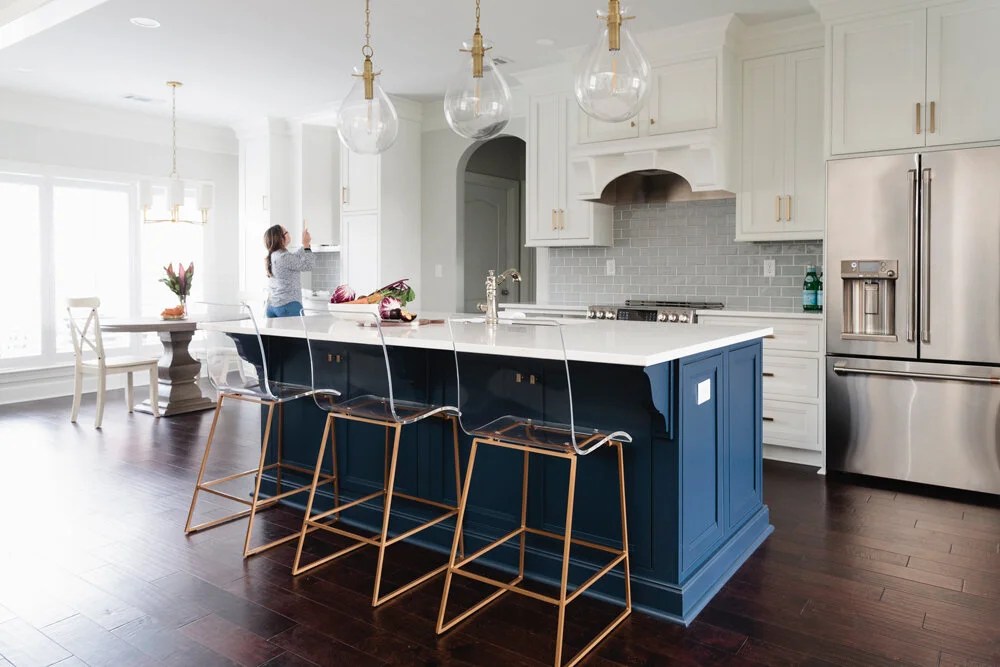
There are several different directions you can go with your island kitchen layout. We will look at four of the most popular kitchen island layout ideas and help you visualize how they might work for


0 comments:
Post a Comment